Journal · 25 September 2026
Why Linen Anchors Architecture in Linen
The fabric behind the capsule's name, and why it was the only real choice for laser-cut geometry.
A & I Editorial
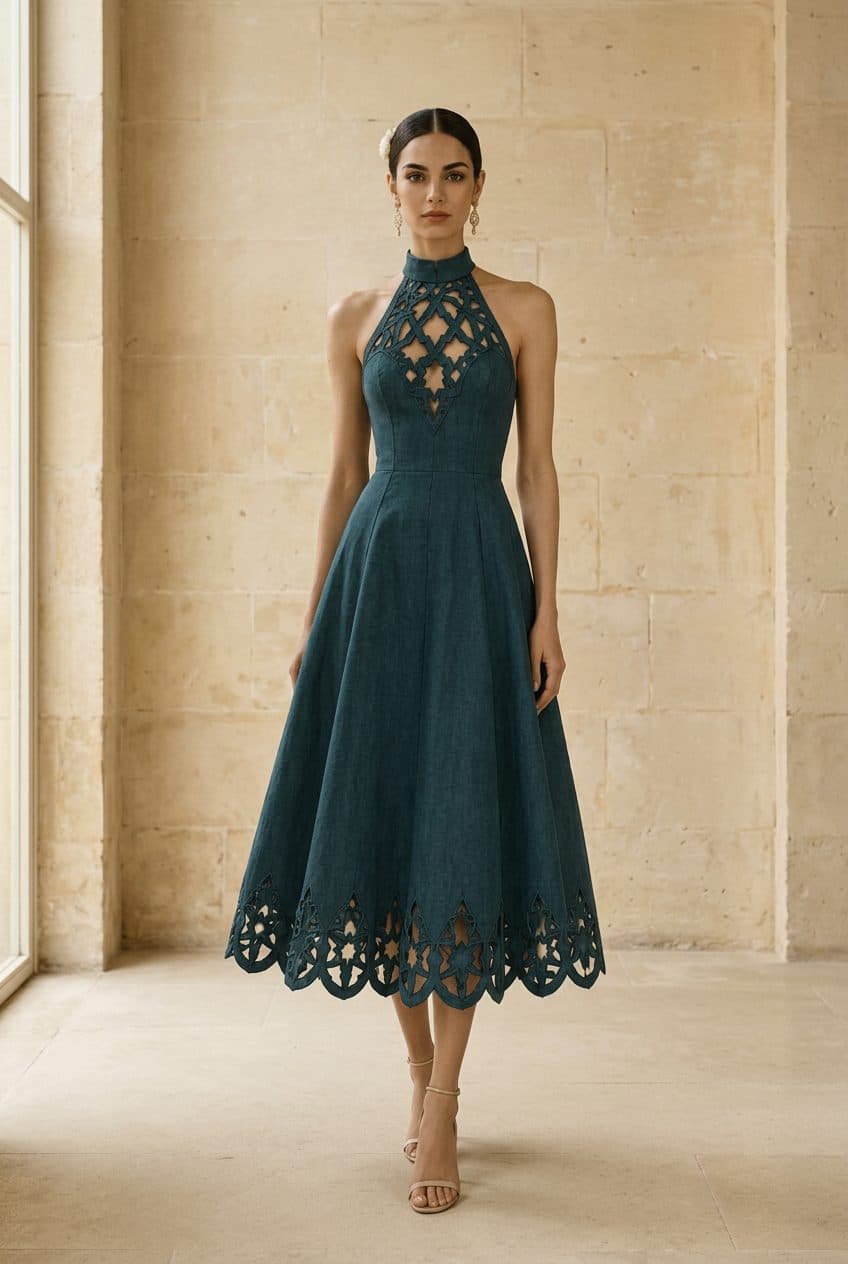
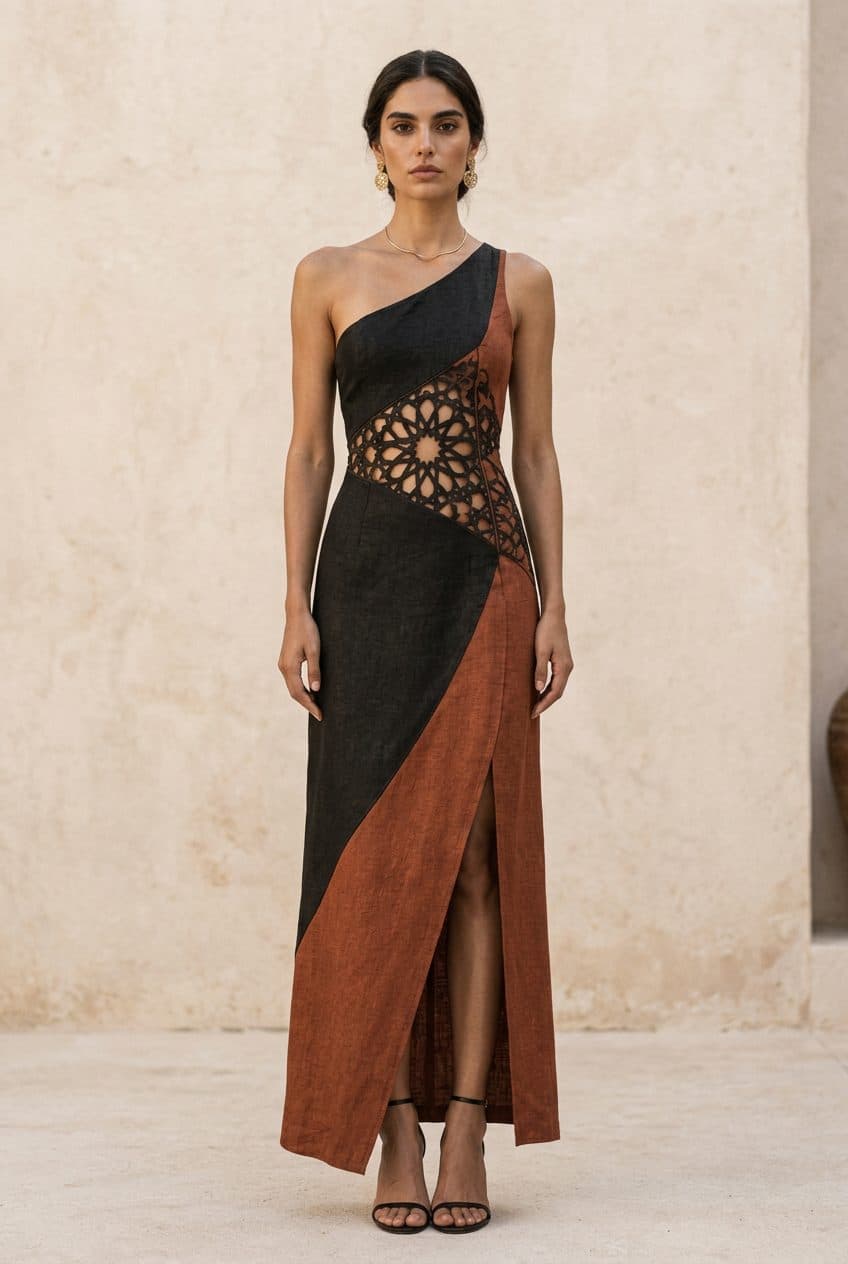
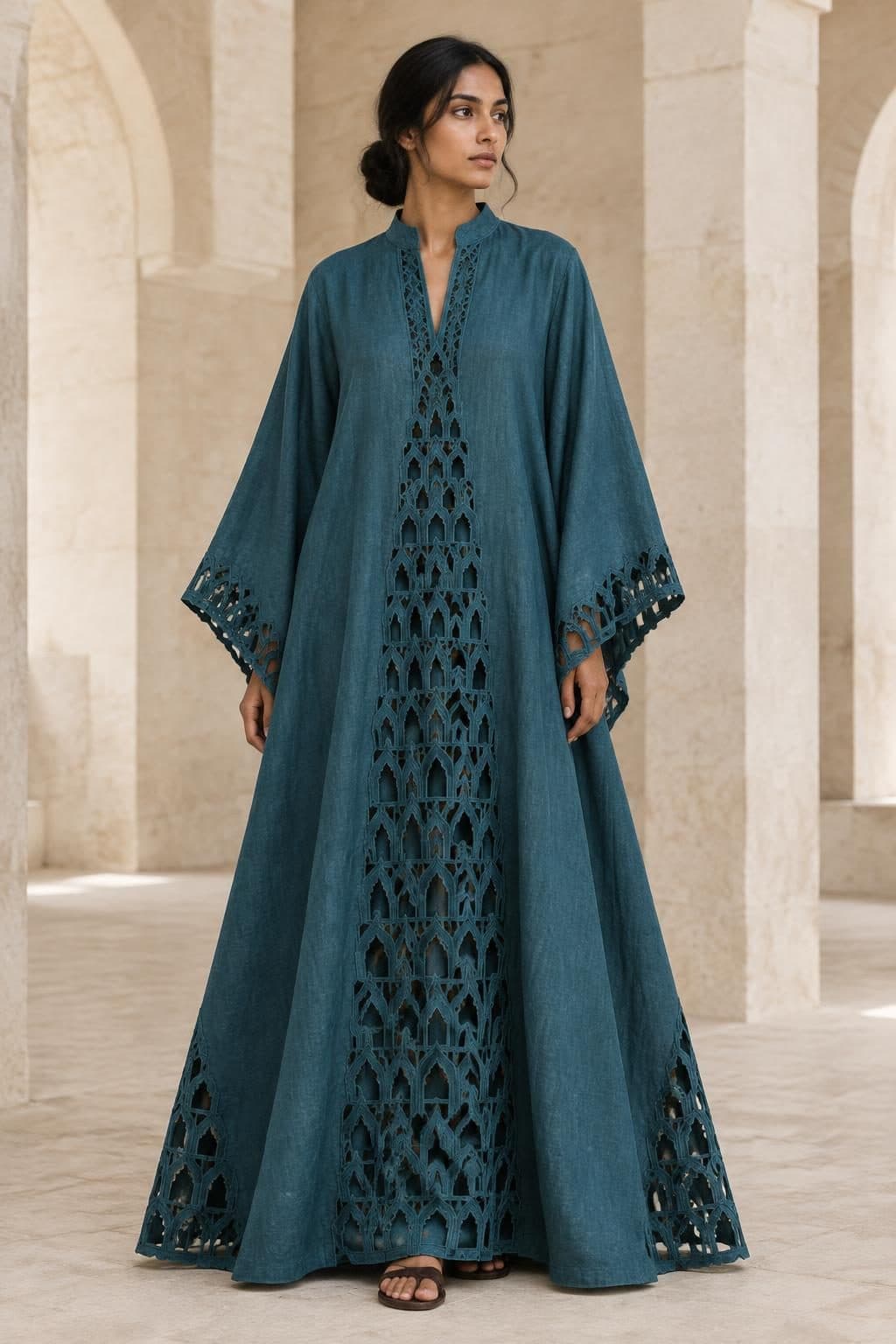
Every piece in Architecture in Linen starts as a drawing before it's a garment — a line, a proportion, a piece of geometry worked out before any cloth is chosen. But the cloth was never really optional. Once the design language settled on cutwork — precise, laser-cut openings that have to hold their shape rather than fray — linen was the fabric that made the idea possible at all.
Linen is woven from flax fibre, and flax behaves nothing like cotton even though the two get shelved together. The fibre itself is stiffer and less elastic, which is exactly what a cut edge needs: a looser, softer weave would curl or fray the moment a geometric opening was cut into it. Linen's tighter, more structured hand holds a clean edge, especially once that edge is hand-finished the way every piece in this capsule is.
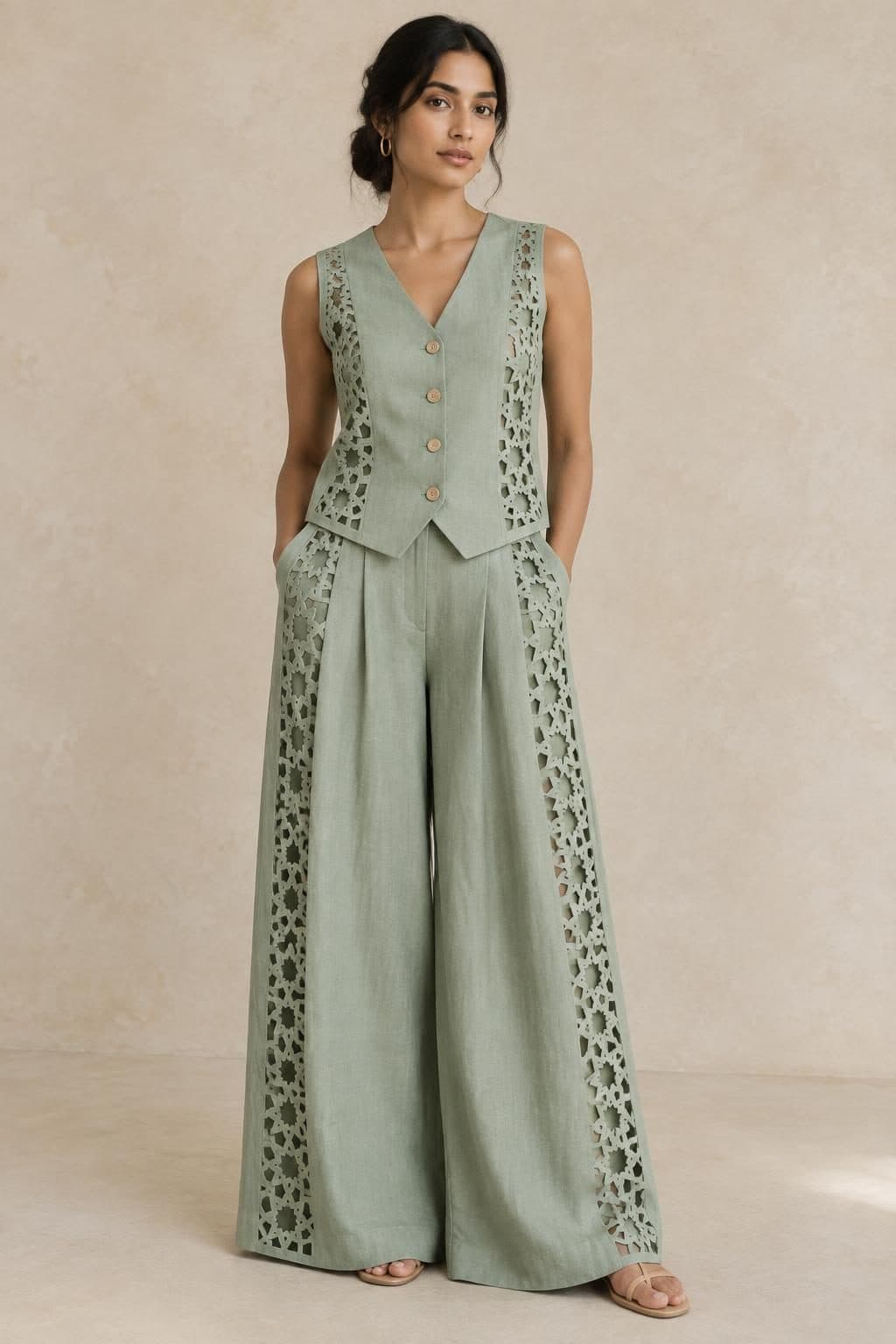
It also drapes with intention rather than clinging, which matters for a capsule built on architectural silhouettes — wide-leg trousers, structured waistcoats, column gowns. The weight of linen lets a wide leg fall in a straight, deliberate line instead of collapsing, and lets a fitted bodice keep its shape without needing heavy interfacing underneath.
Featured in this story
Pre-order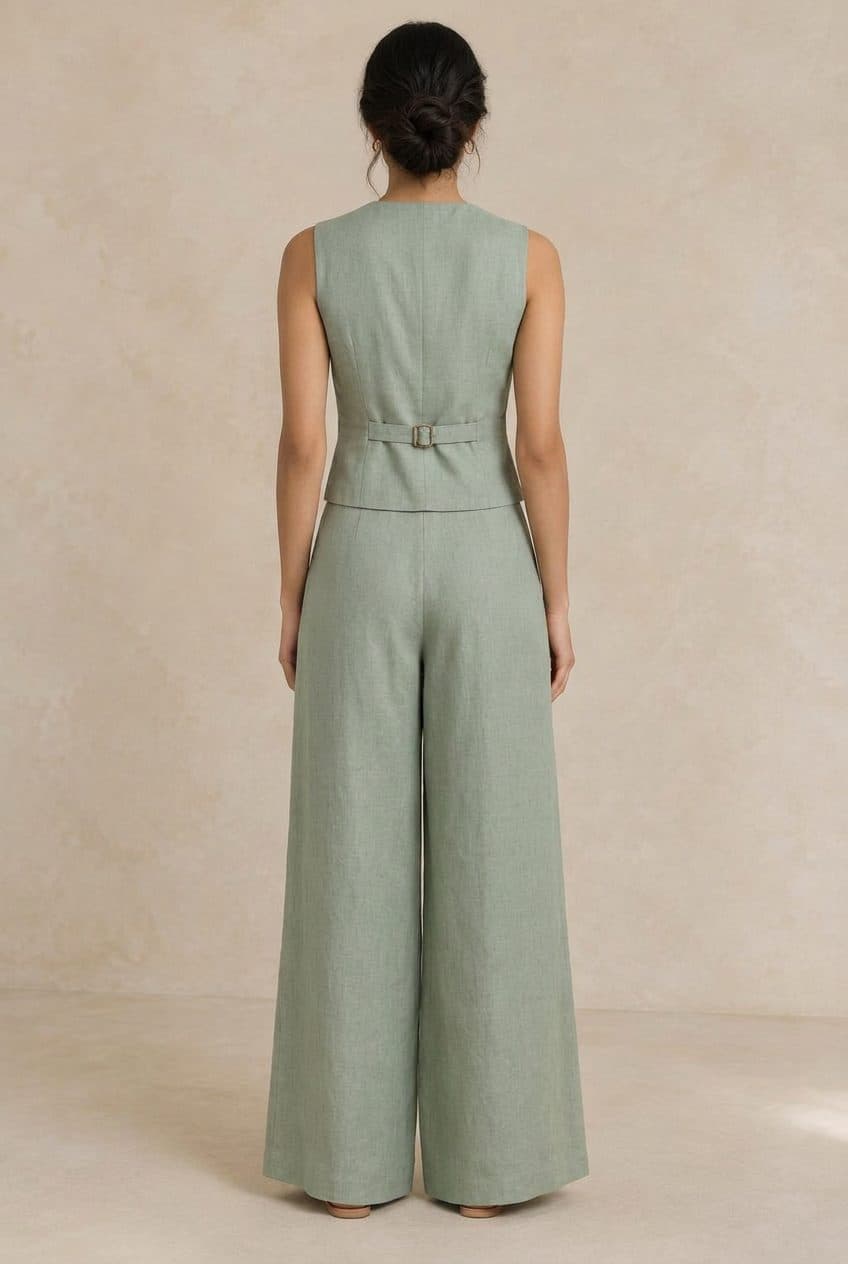
Tailored V-neck waistcoat with girih side panels, over wide palazzo trousers
There's a practical side too: linen's natural fibre is hollow, which is part of why it's stayed a warm-climate staple for thousands of years. For clothing meant to be worn, not just photographed, that's not a small thing.
None of this is why linen ended up in the capsule's name by accident. It's the fabric the whole idea depended on.