Journal · 25 September 2026
Beyond Girih: Bauhaus, Moorish Arches, and Art Nouveau in One Capsule
Architecture in Linen draws on more than one design tradition — here's what's actually in it.
A & I Editorial
Girih tiling is the anchor of Architecture in Linen, but it isn't the only architectural language in the capsule. Look closely at the names across the collection and three more real design traditions show up, each reworked the same way — as laser-cut openings rather than surface print.
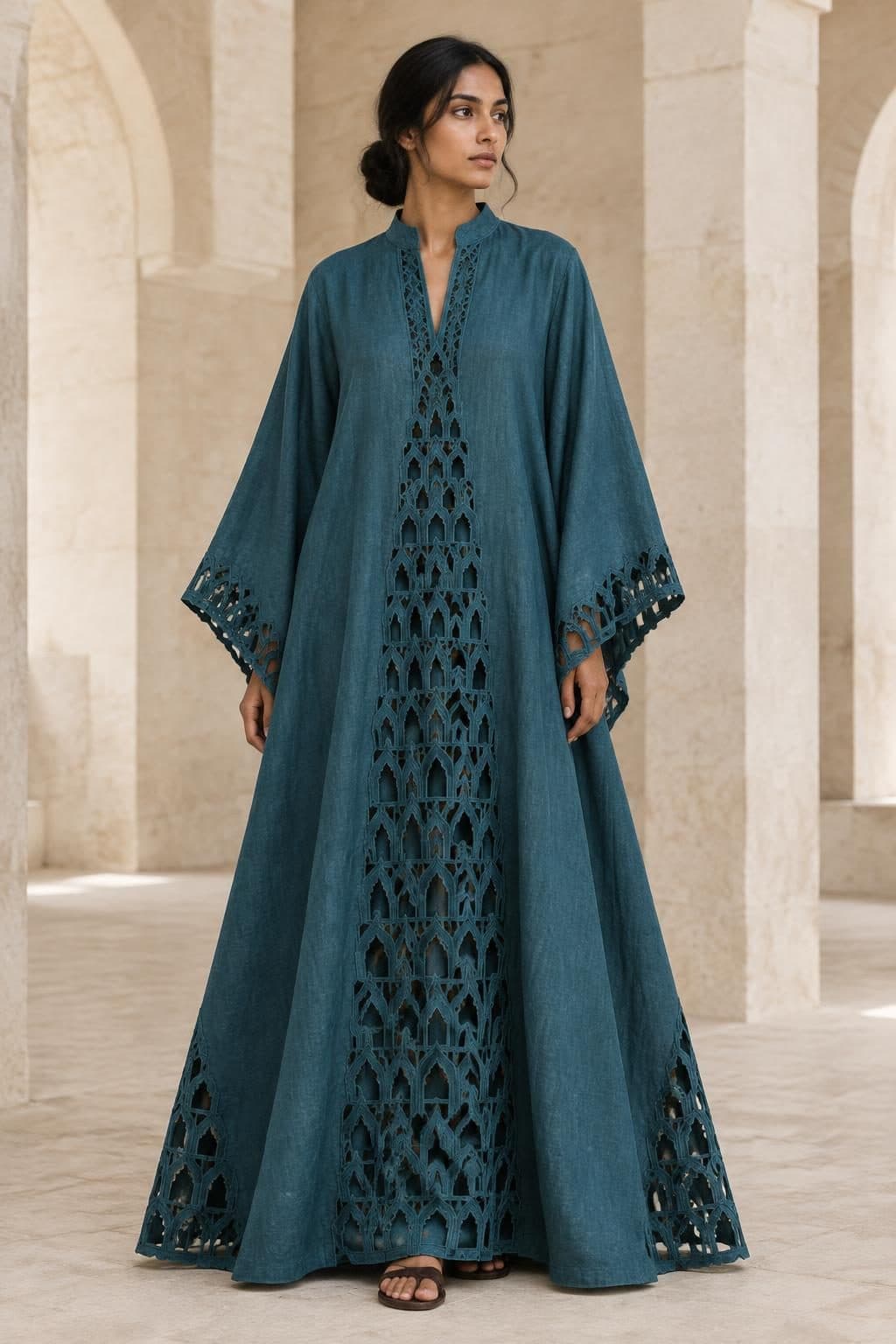
Moorish muqarnas is the one with the most physical presence. Muqarnas are the honeycomb-like, stalactite vaulting you see in the ceilings and archways of Moorish and wider Islamic architecture — a way of transitioning between a square room and a round dome using tiers of small, sculptural niches. The capsule's caftan borrows the pointed-arch geometry that muqarnas structures are built from, translated into a cutwork panel rather than carved plaster.
Bauhaus is the odd one out chronologically — a 20th-century German design movement, not a centuries-old tradition — but it belongs here for the same reason the others do: Bauhaus design reduced form to grids, right angles and primary structure, stripping ornament down to what the geometry itself could do. A grid cutwork leg on a jumpsuit is a fairly literal translation of that idea into fabric.
Featured in this story
Pre-order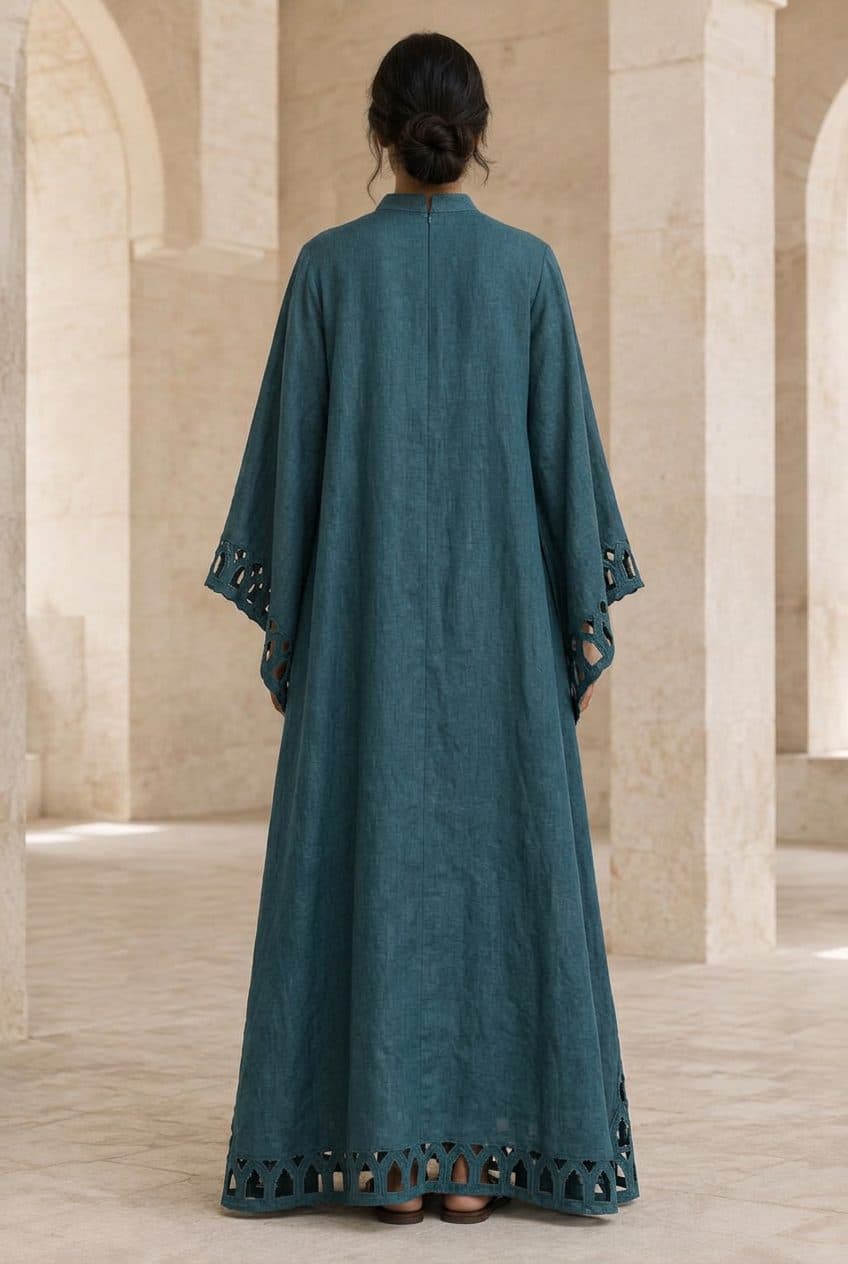
Flowing caftan with a stacked-niche muqarnas cutwork panel
Art Nouveau runs in the opposite direction — organic, flowing vine and line work rather than rigid geometry — and its presence in the capsule (a cutwork gown built around vine-like line patterning) is the clearest sign that "Architecture in Linen" isn't only about hard angles. It's about architectural thinking generally: patterns with real structural logic behind them, whichever era or geography they come from.
Four traditions, one technique. That's the actual range of the capsule, not just the name on the label.