Journal · 25 September 2026
Girih: The Geometry Behind Our Cutwork
The centuries-old tiling pattern that anchors Architecture in Linen, explained.
A & I Editorial
"Girih" is a Persian word for knot, and it names one of the oldest systematic design languages in architecture: a method for building complex, interlocking star-and-polygon patterns from a small set of simple tile shapes, repeated and rotated according to strict geometric rules. It shows up across centuries of Islamic architecture — tilework on mosques, madrasas and palaces from Iran to Central Asia — long before anyone had a word for "parametric design," even though that's essentially what it is.
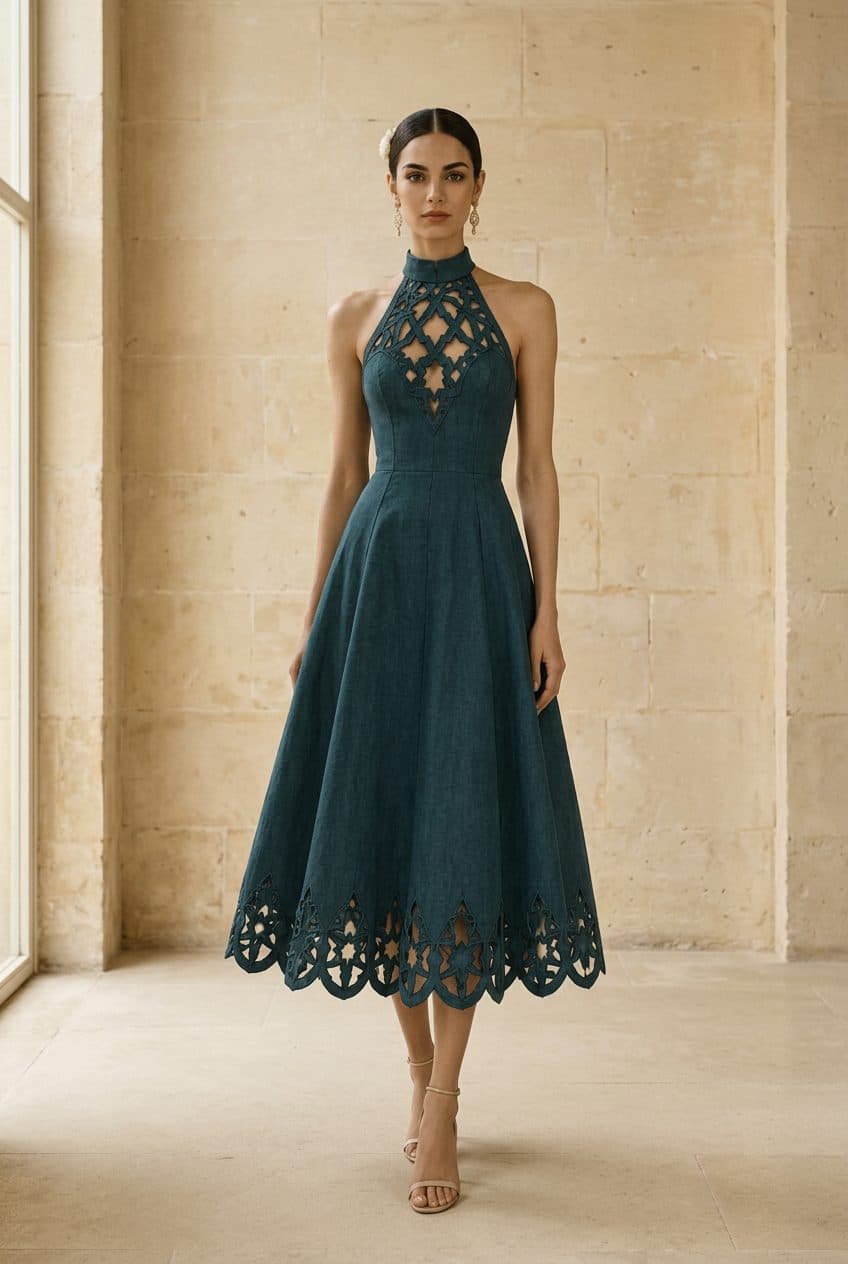
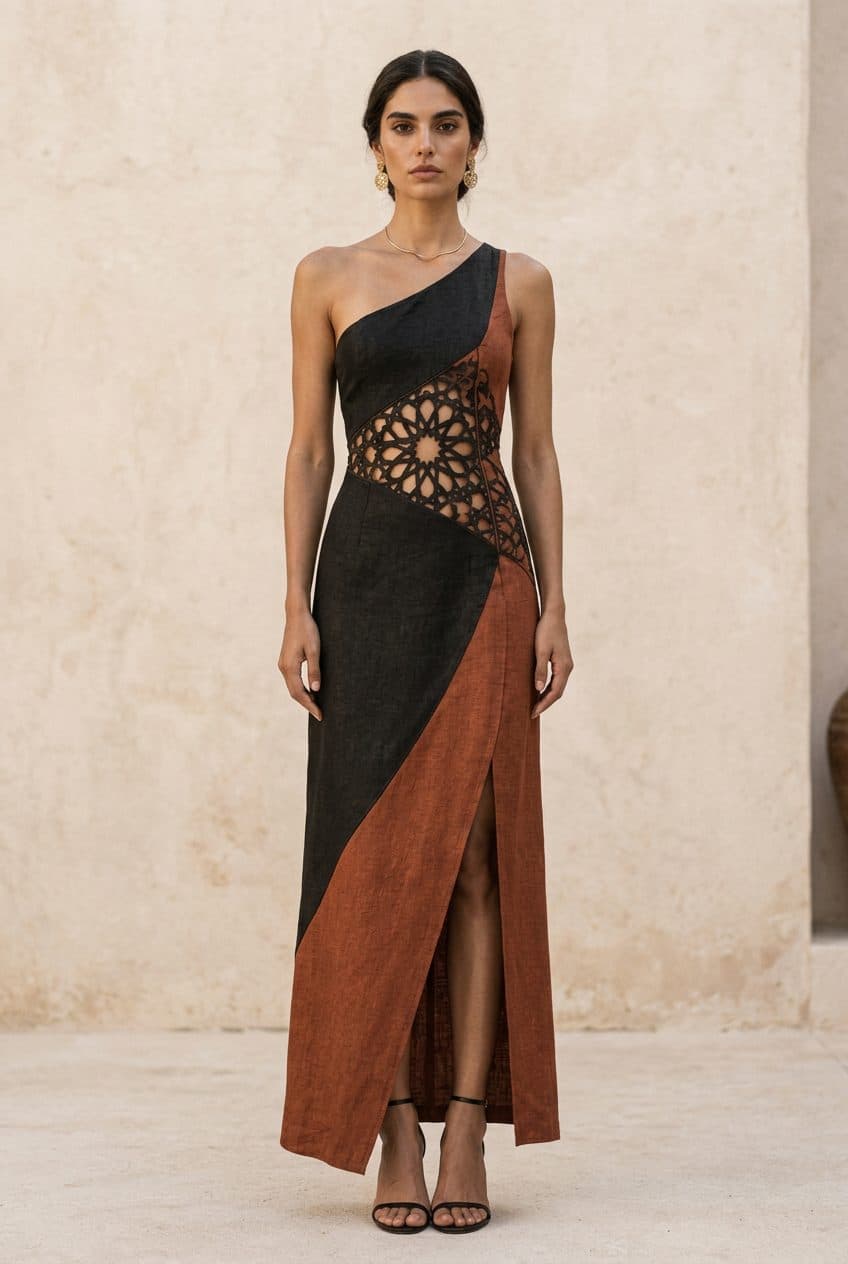
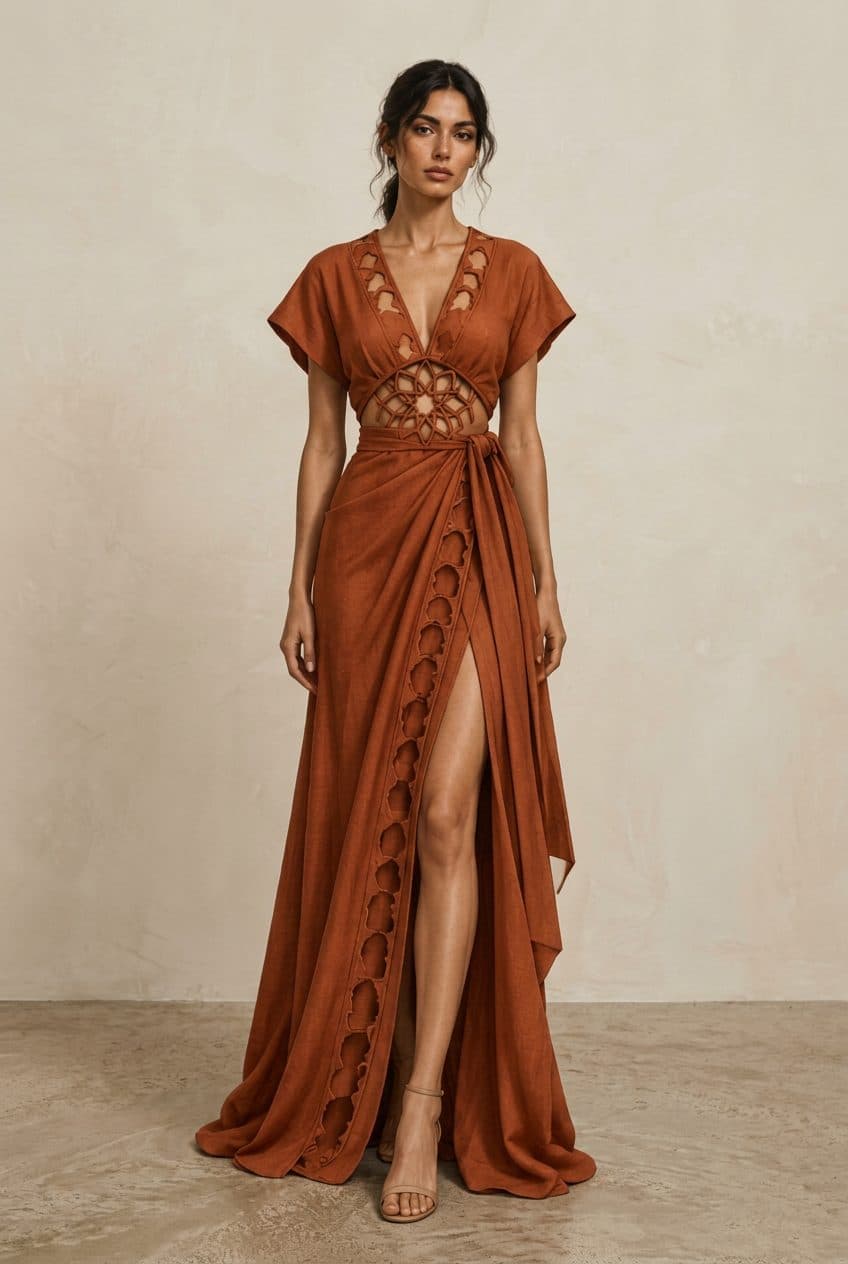
The appeal for a cutwork capsule is almost too on-the-nose: girih was never decoration applied on top of a surface. It's structural logic that happens to be beautiful — the pattern IS the geometry holding itself together, which is exactly what a laser-cut garment edge needs to be. A wrap gown's rosette cage midriff, a jumpsuit's star fretwork bodice — these aren't girih patterns printed onto fabric, they're girih patterns cut as openings, so the logic of the tiling is doing structural work on the body the same way it does on a wall.
Featured in this story
Pre-order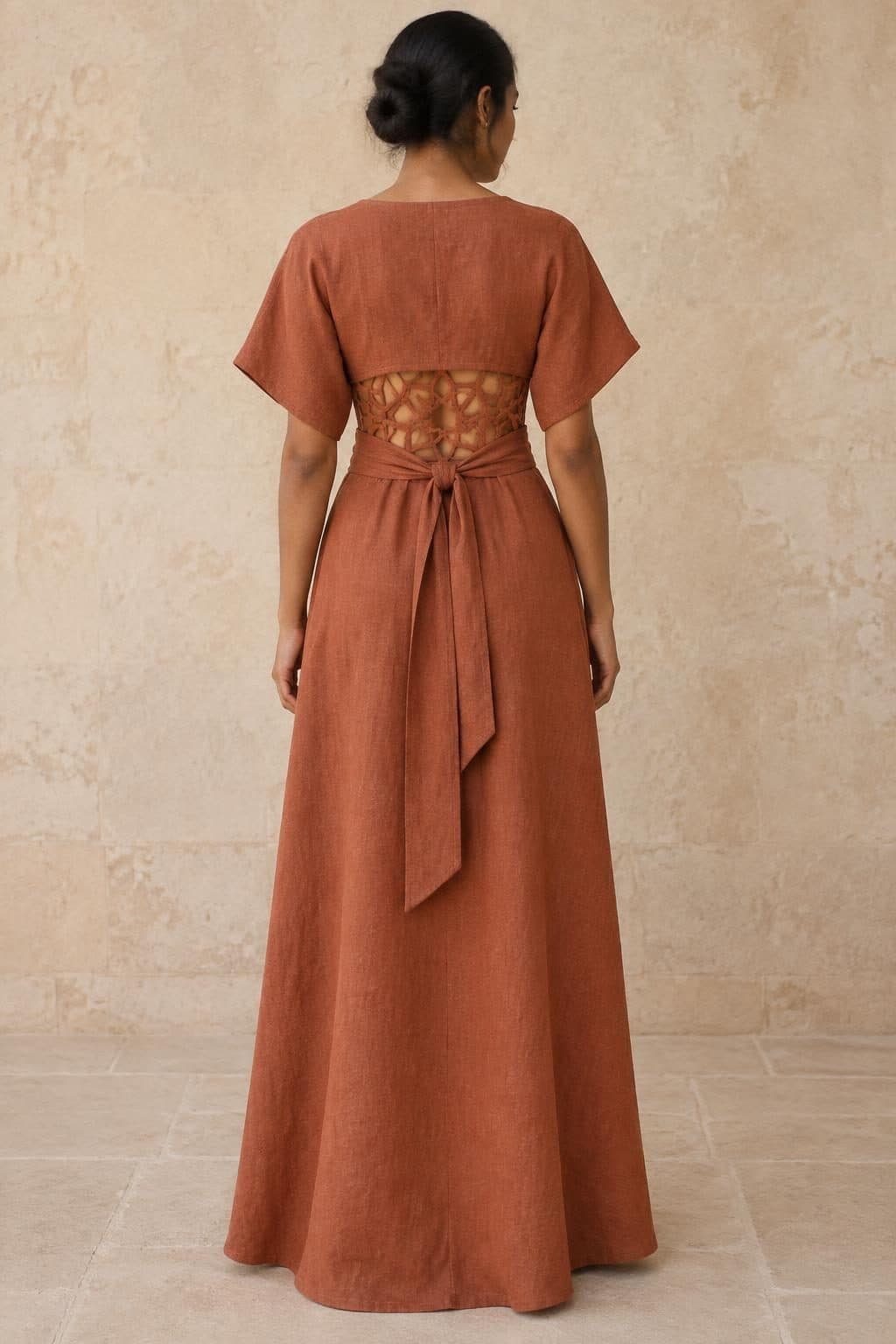
Deep-V wrap gown with a girih rosette cage midriff and a sash-tied wrap skirt
Reworking a centuries-old tiling tradition as laser-cut fabric is a genuinely different execution of an old idea, not a redraw of it: precision laser-cutting achieves a level of geometric accuracy that hand-carved stone or hand-cut tile never aimed for, and every edge is then hand-finished by a specialist craft partner so the pattern holds its shape wear after wear instead of fraying at the open edges the way a lesser cut would.
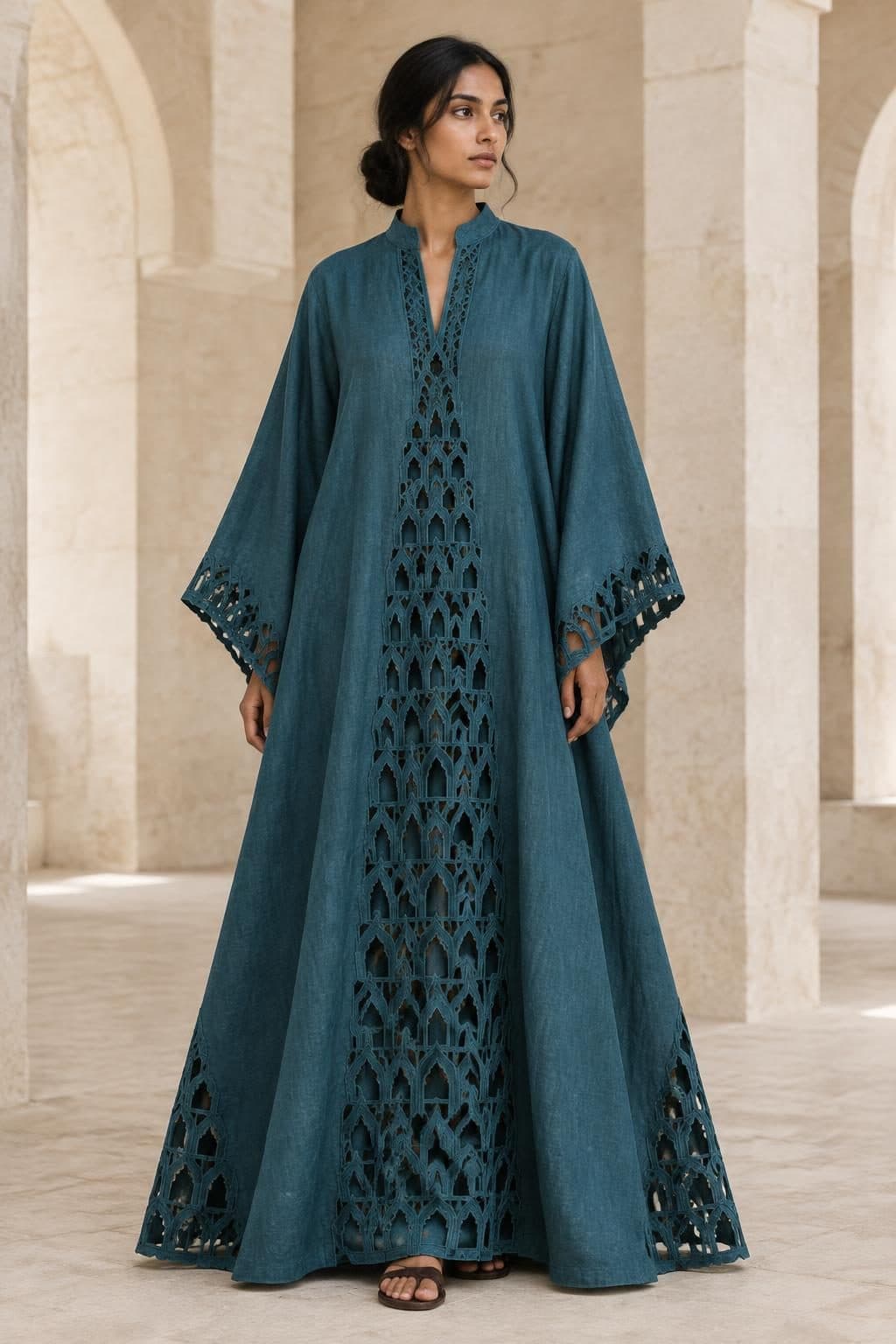
Girih is the throughline across most of Architecture in Linen, even where a specific piece borrows from a different tradition — Bauhaus grids, Moorish muqarnas, Art Nouveau line work all appear across the capsule too, each one a different answer to the same question girih poses: what happens when geometry becomes the garment, instead of just decorating it.